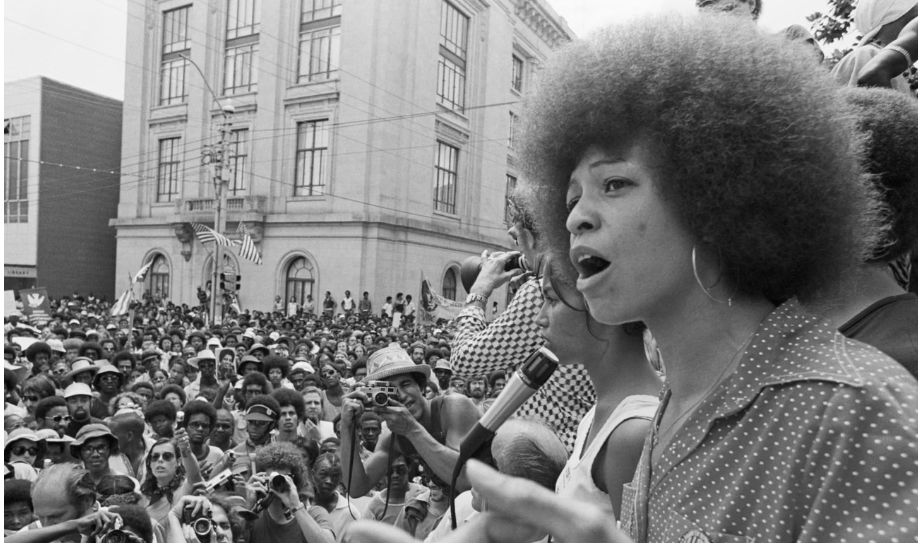
Gist, “WHM: Angela Davis,” Carolina Women’s Center.
The massacre at Attica shocked the world. Public
reaction was intense.
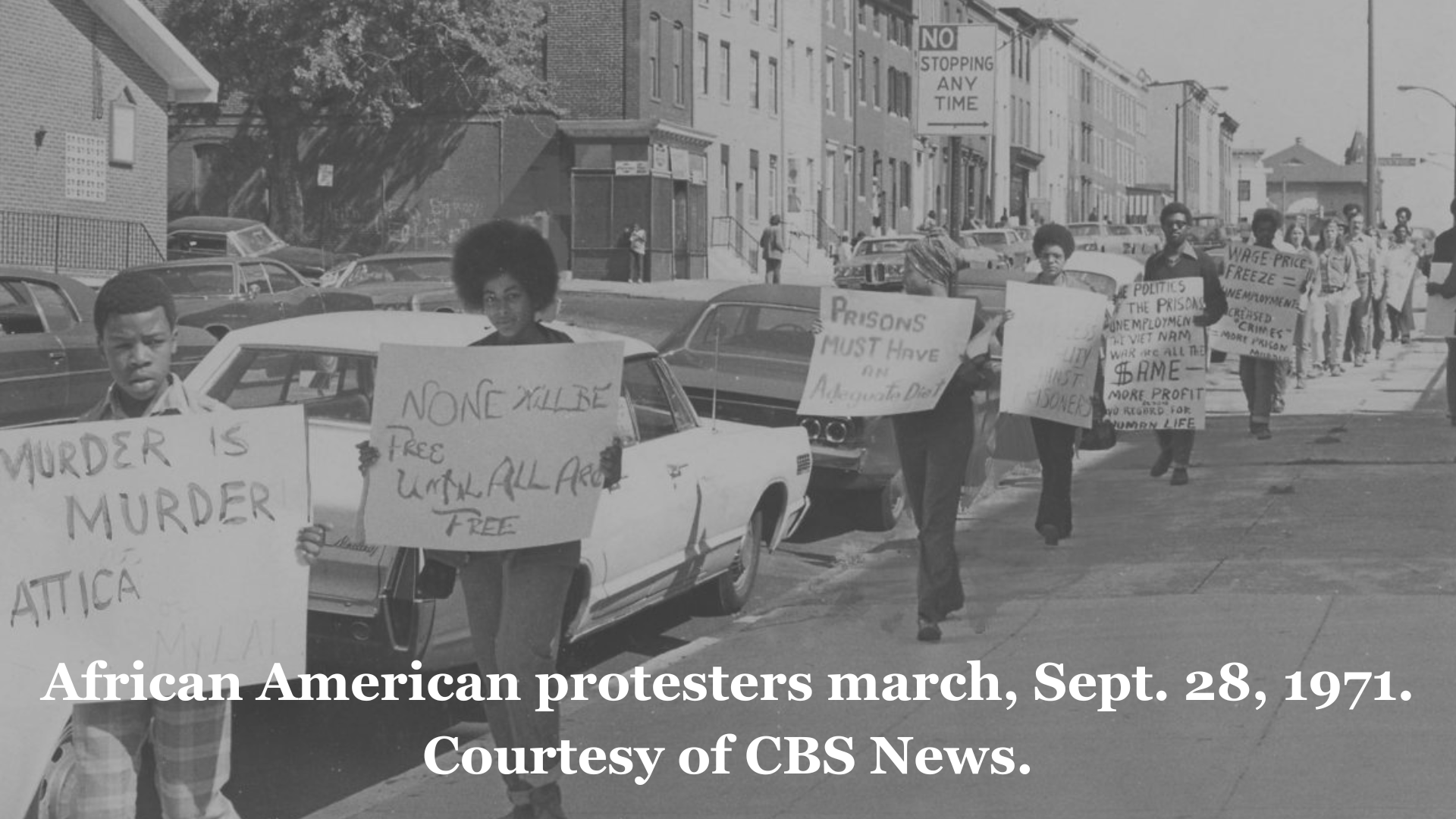
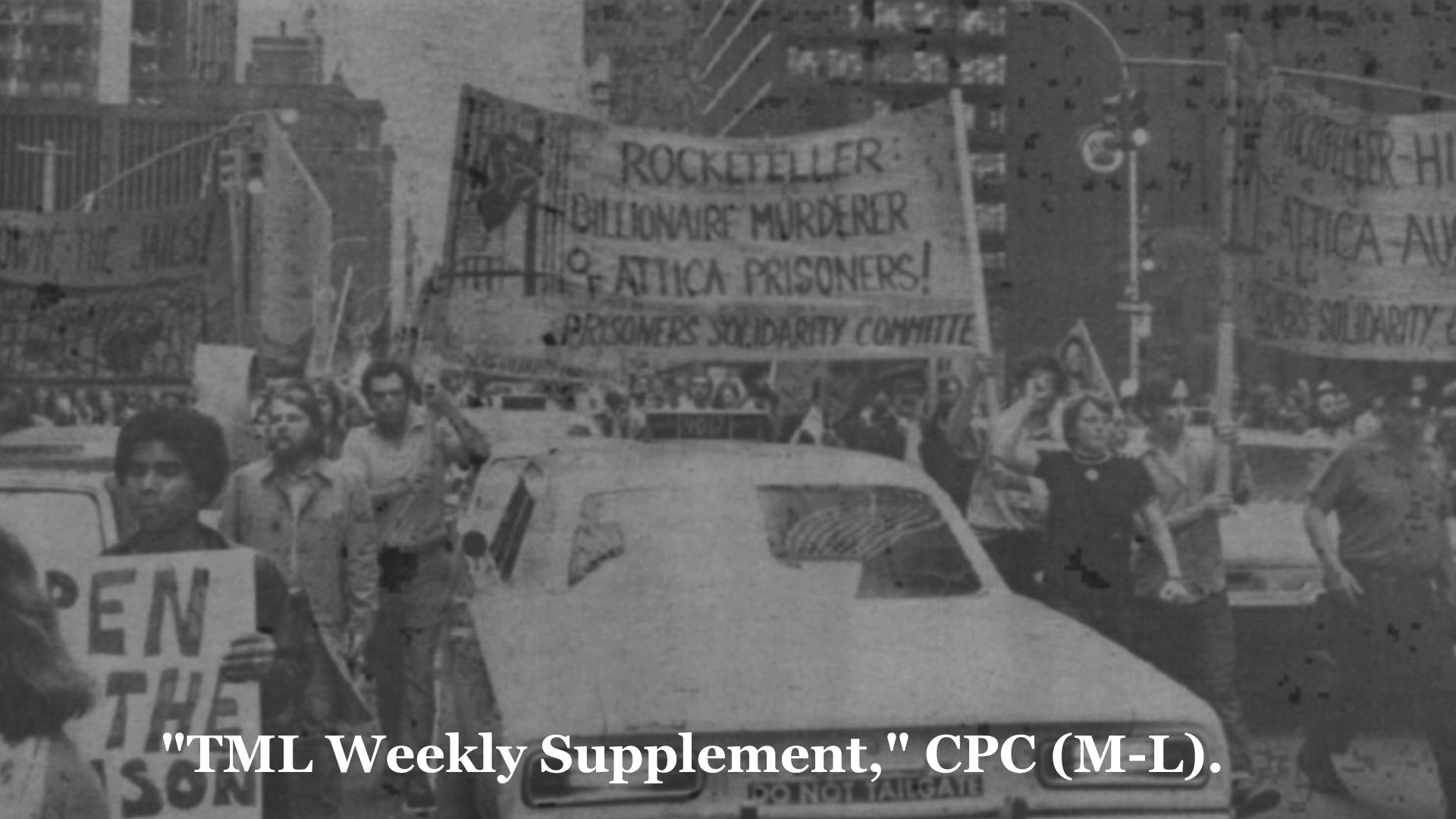
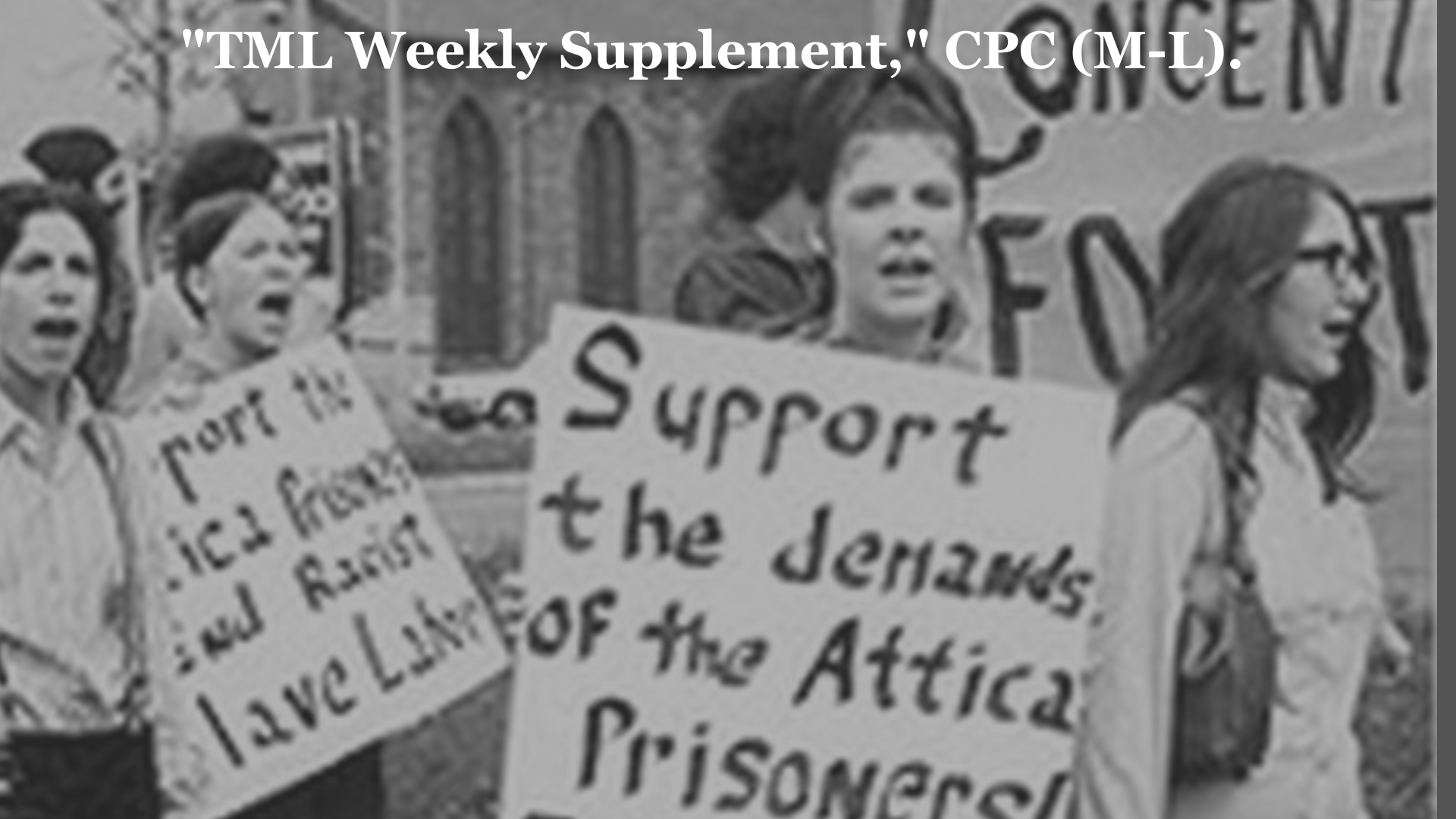
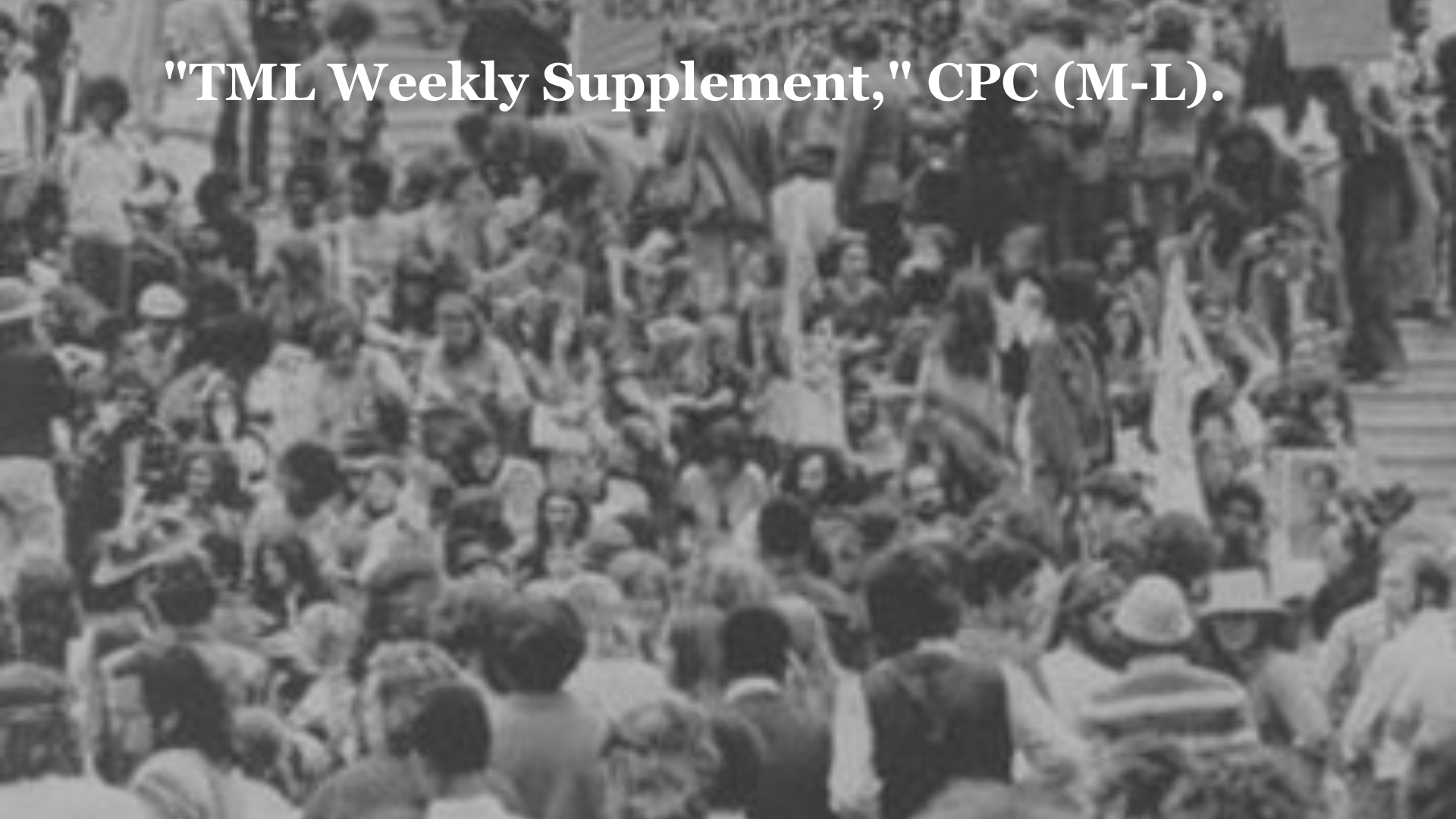
Gist, “WHM: Angela Davis,” Carolina Women’s Center.
Angela Davis likened Attica to patterns of state violence:
"Scores of men are dead. By now, more people should realize that such explosive acts of repression are not minor aberrations. We have witnessed Birmingham, Orangeburg, Jackson State, Kent State, Mylai, San Quentin"
Davis, The New York Times, Oct. 8, 1971.
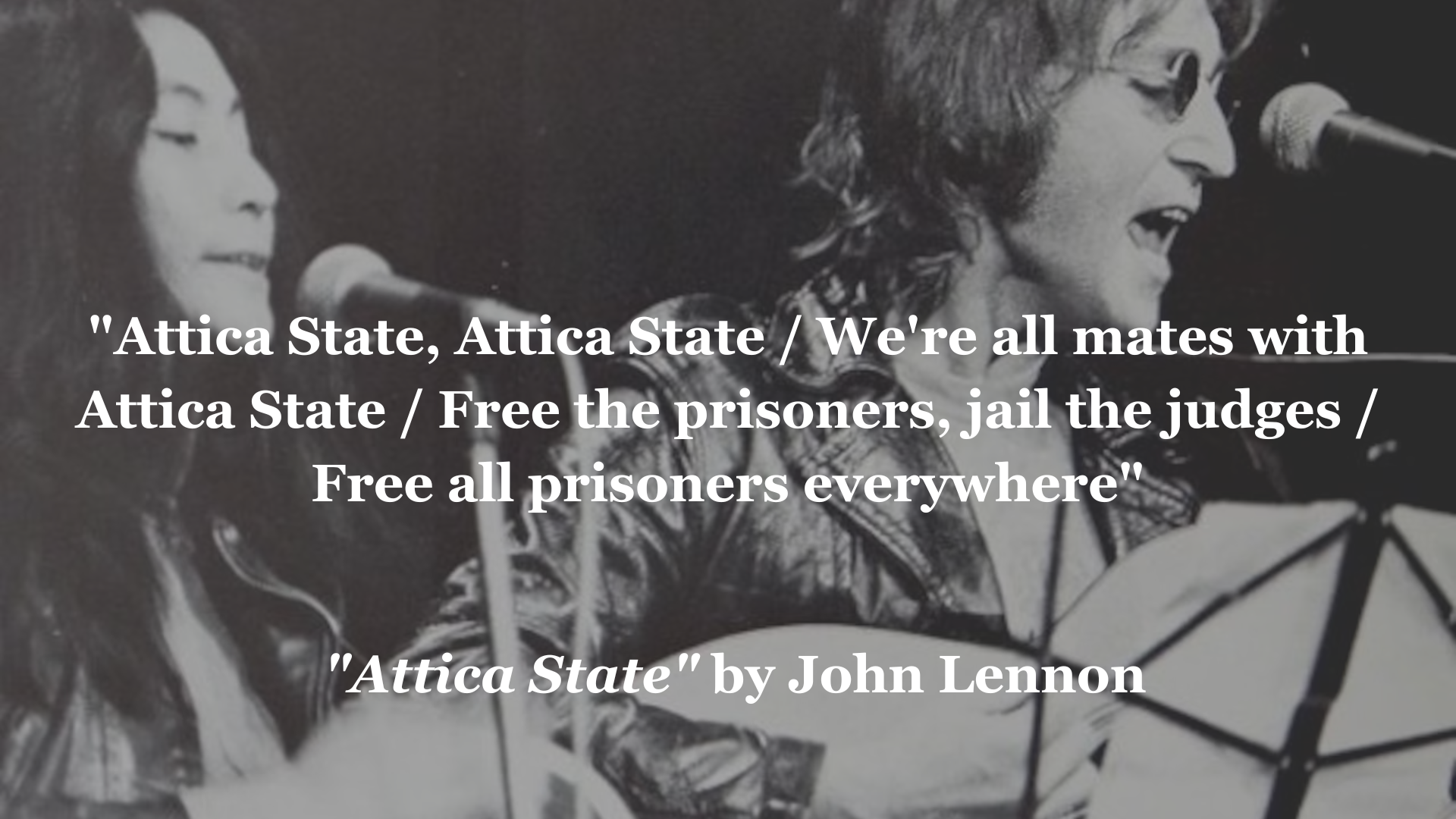

The McKay Commission’s investigation was flawed—state police lost or destroyed evidence, no officers were charged despite all deaths being a result of law enforcement's mishandling of the situation; instead, 62 inmates faced 1,300 charges.
Specific changes included: a 400% wage increase, more medical staff, $8 million for drug treatment funding, new grievance committees, relaxed censorship, and expanded education programs.
"Real beginnings have been made in improving basic programs—retraining of correction officers, education and rehabilitation of inmates, making the parole system more rational and humane"
The New York Times, Sept. 12, 1972.
"Attica and other state prisons now have such outlets as new gymnasium and elected inmate liaison committees. Inmate grievance committees have given prisoners the ability to formally petition when differences cannot be resolved internally. Strip searches have been curtailed, and censorship rules relaxed"
The New York Times, Aug. 29, 1976.
In 1973, Rockefeller proposed an additional $12 million for prison improvements.
"..it wasn't about money. "Money can't bring back the dead and bring back what was taken from us" (Davies, NPR).
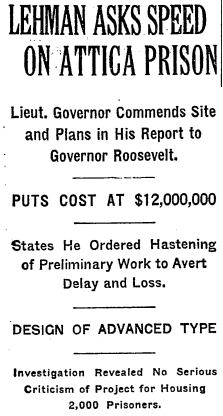
Published in
The New York Times, Dec. 23, 1929.
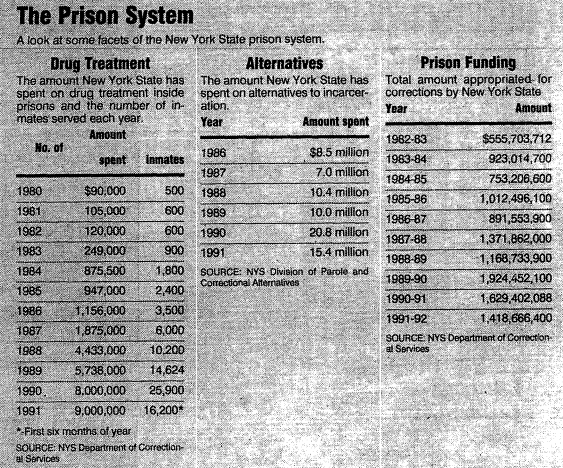
Data from
Newsday, Sept. 10, 1991.
New York responded by boosting prison drug treatment and increased spending on alternatives to incarceration including probation, community service, and drug treatment courts.
In 1997, Frank "Big Black" Smith won $4 million -- the first time a court had held the state accountable for what happened after the assault.

Published in The New York Times, Jan 6, 1997.
In 2000, following lawyer Liz Fink's efforts, $8 million settlement was reached for 502 tortured inmates.
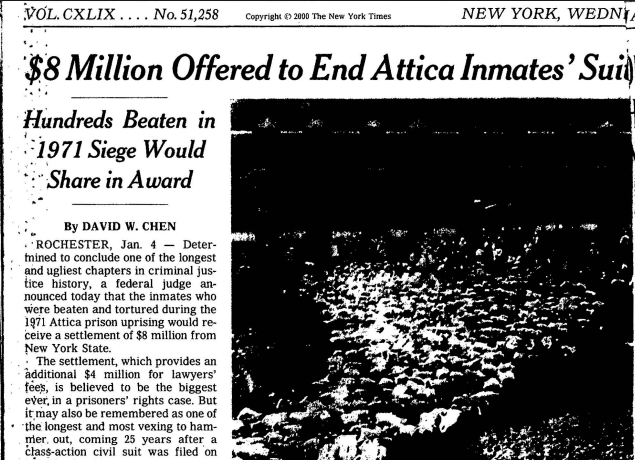
Published in The New York Times, January 5, 2000.