The Inmates organized themselves; it was a carefully planned
revolution.
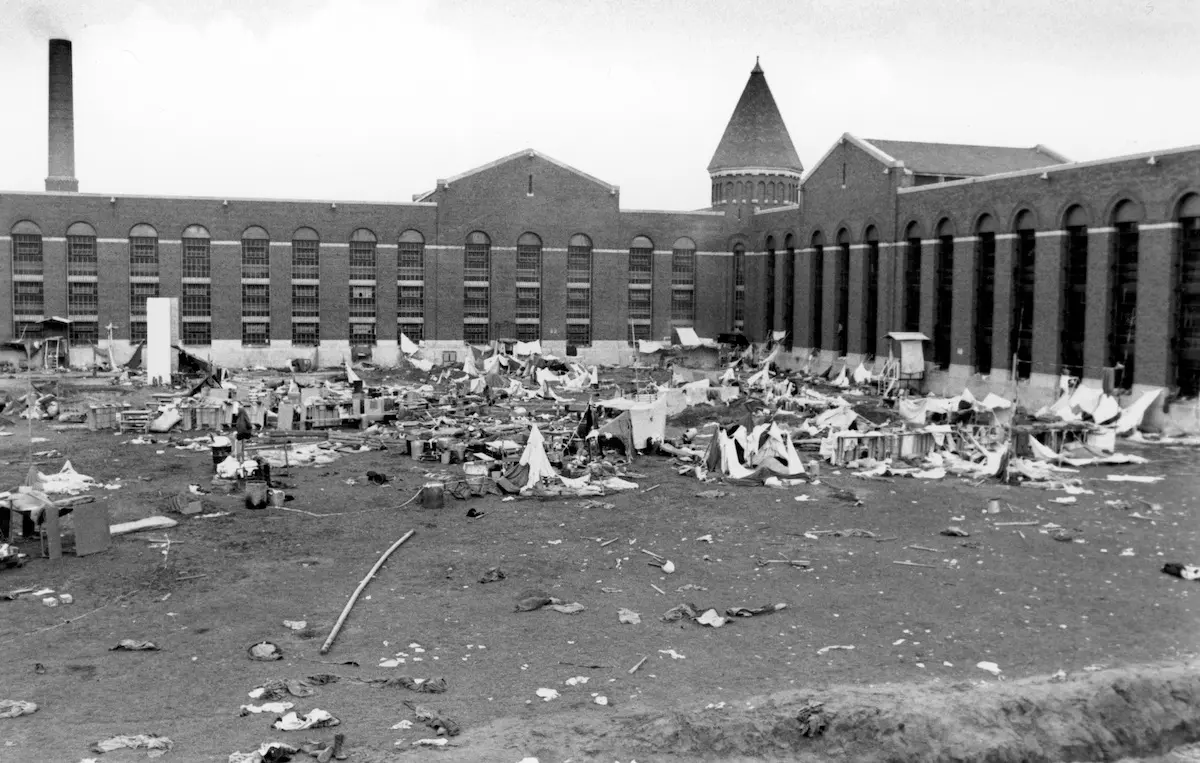
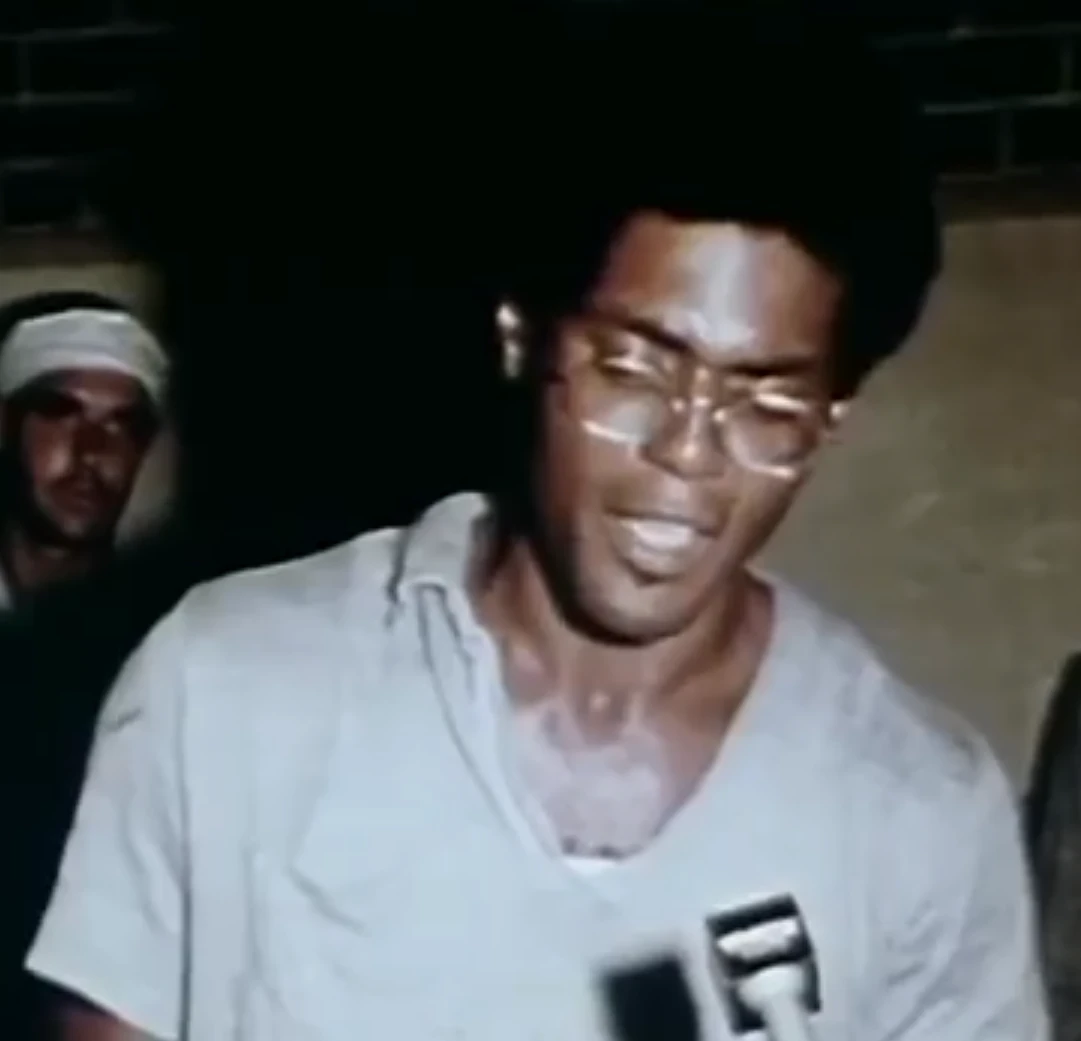
After taking control of D-Yard, the prisoners, led by Richard X Clark, Herbert X. Blyden, Frank Lott, Donald Noble, and Carl Jones-El, communicated their demands through 21-year-old L.D. Barkley, who became the main spokesperson.
Visalli, Time,2o15.
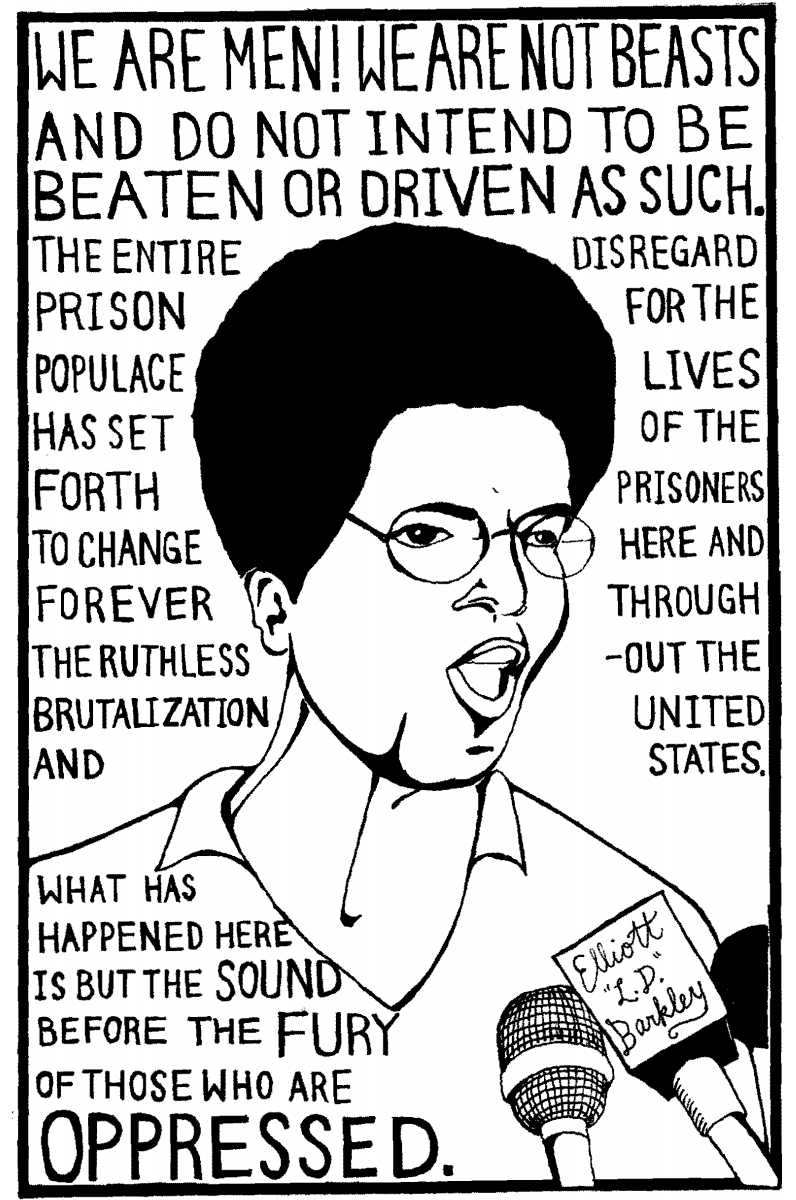
"The entire incident that has erupted here is not a result of the dastardly bushwhacking of two prisoners, September 8, 1971, but of the unmitigated oppression wrought by the racist administrative network of this prison. We are men. We are not beasts and we do not intend to be beaten or driven as such. The entire prison populace have set forth to change forever the ruthless brutalization and disregard for the lives of prisoners. What has happened here is but the sound before the fury of those who are oppressed."
L.D. Barkley's Declaration to the People of America.
LD Barkley, 1971
Historica Wiki.
On the first day, L.D. Barkley, just days from his release, stood before assembled prisoners and observers and urged that Attica prisoners be treated not as beasts, but as human beings deserving of respect.
His mother reflected:
"He was coming out within a couple of days, but he took the risk, stayed, and was their spokesman."
Laverne Barkley, interview
Katy Groves/Project NIA.
CPC(M-L), “TML Weekly Supplement.”
Unity in D-Yard
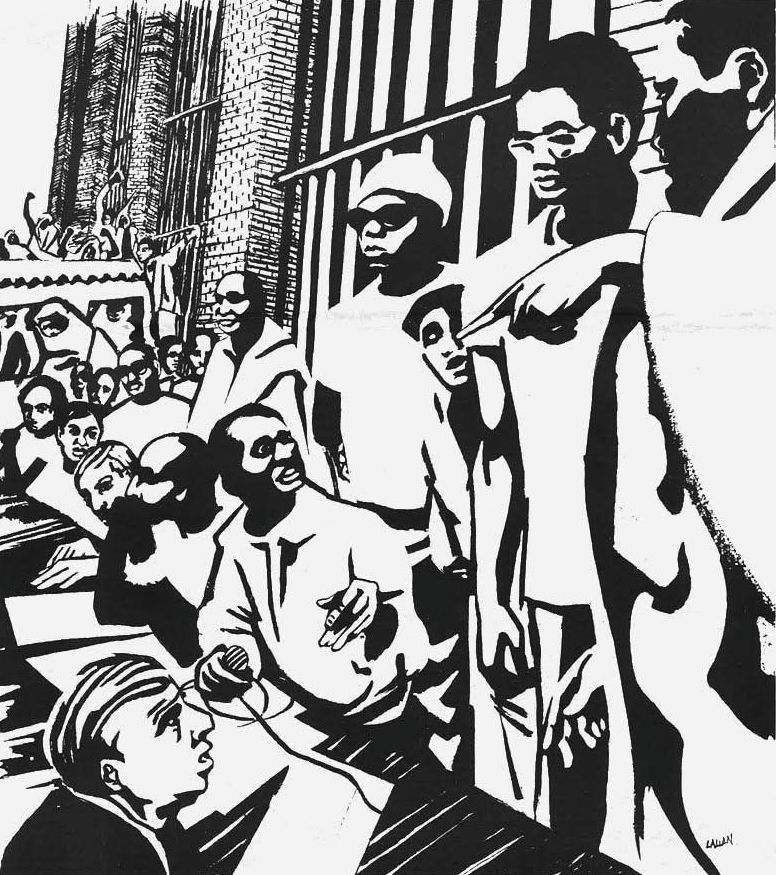
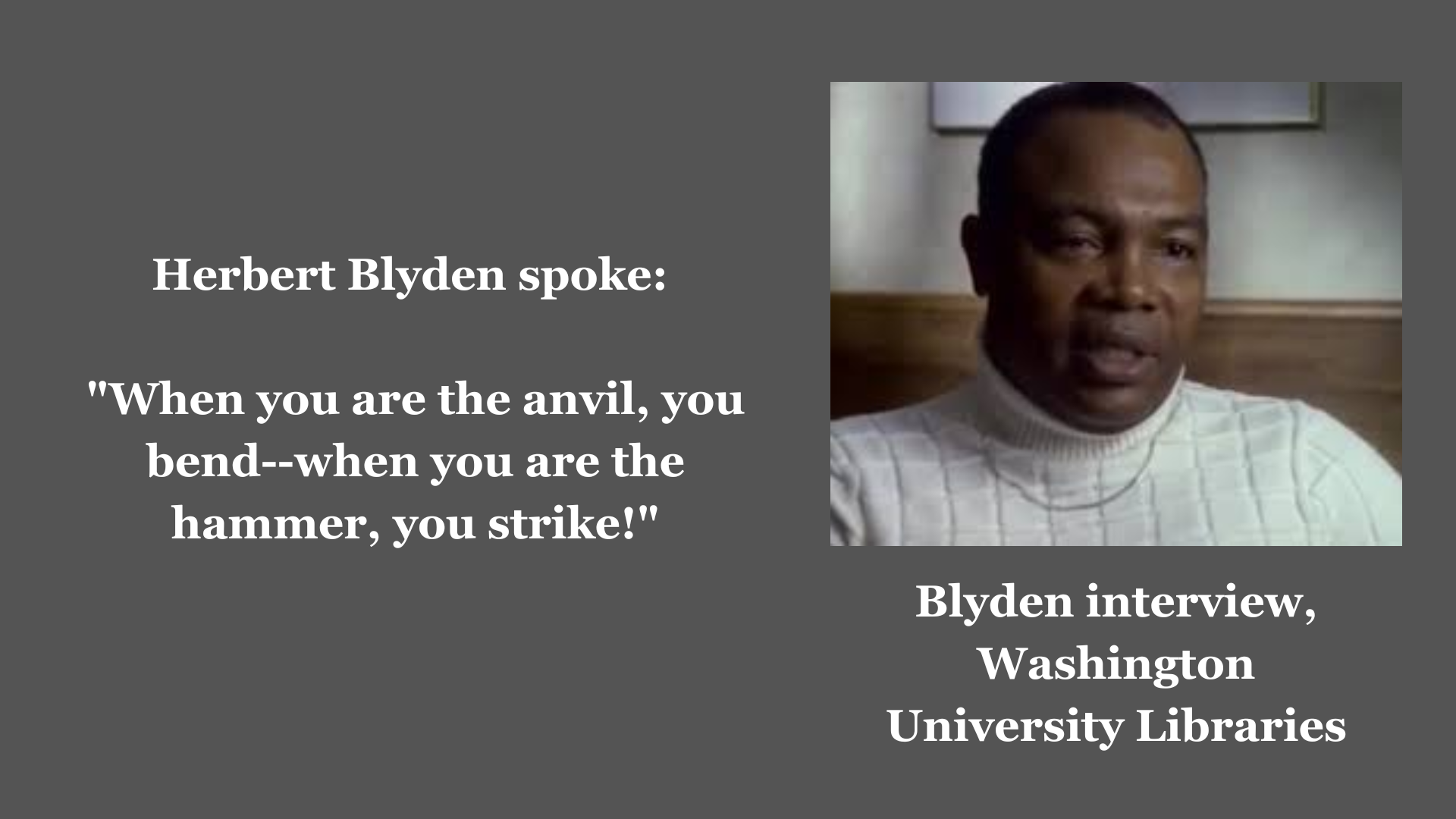
"Brothers! The world is hearing us! The world is seeing our struggle! Look at these men from all over this country coming here at our call, brothers, coming here to witness firsthand the struggle against racist oppression and brutalization." Herb Blyden.
Mamo,
Harvard Law Review, 2014.
Music filled D-Yard—drums, guitar, saxophone. Richard X Clark
reflected:
"No matter what happens later, they couldn't take this night away from us."
“Attica 14th Anniversary,” Law and Disorder Radio.
The Negotiations
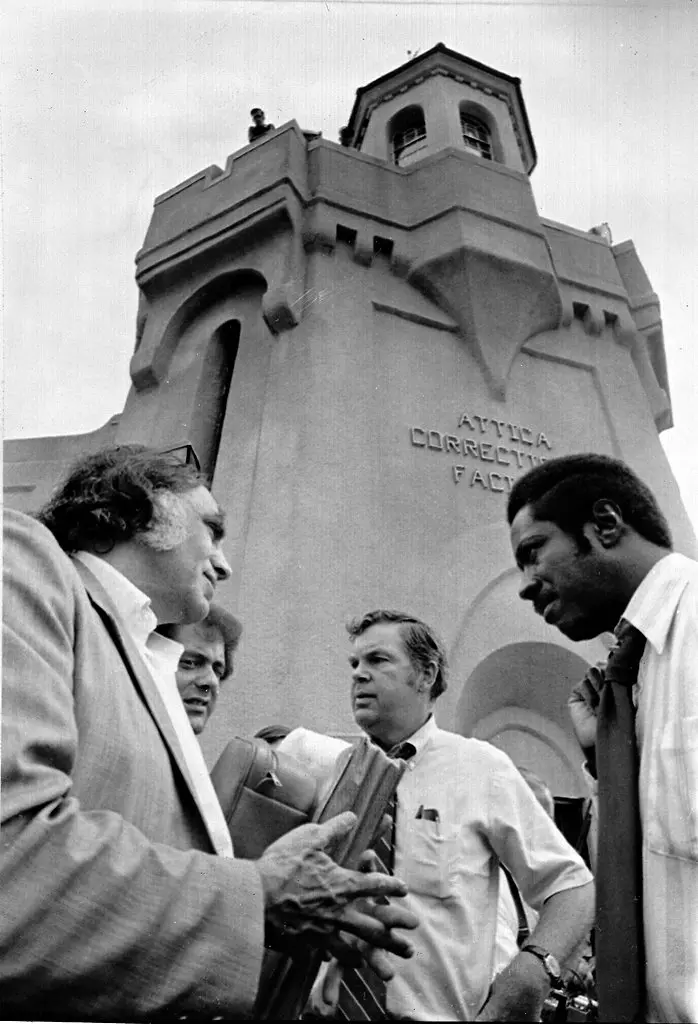
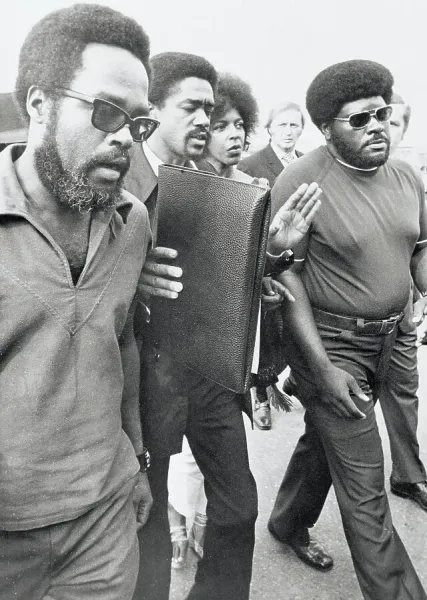
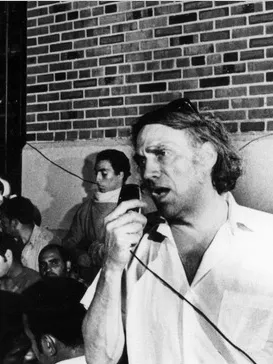
Inmates asked for outside observers like lawyers, activists, and journalists to ensure fair negotiations. Oswald agreed, bringing in Tom Wicker, William Kunstler, and Bobby Seale.
Tom Wiker The New York Times
Bobby Seale: Disturbing the Universe, 2010 PBS
William Kunstler 1971. Bettmann Archive.
David Rothenberg, a prison
reformactivist said:
"I had no expectations. It was a learning process. So at best, my role was to listen."
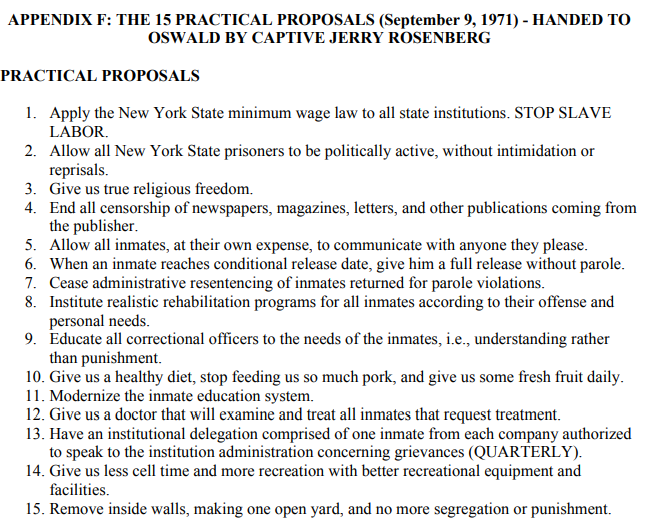
The 15 Practical Proposals
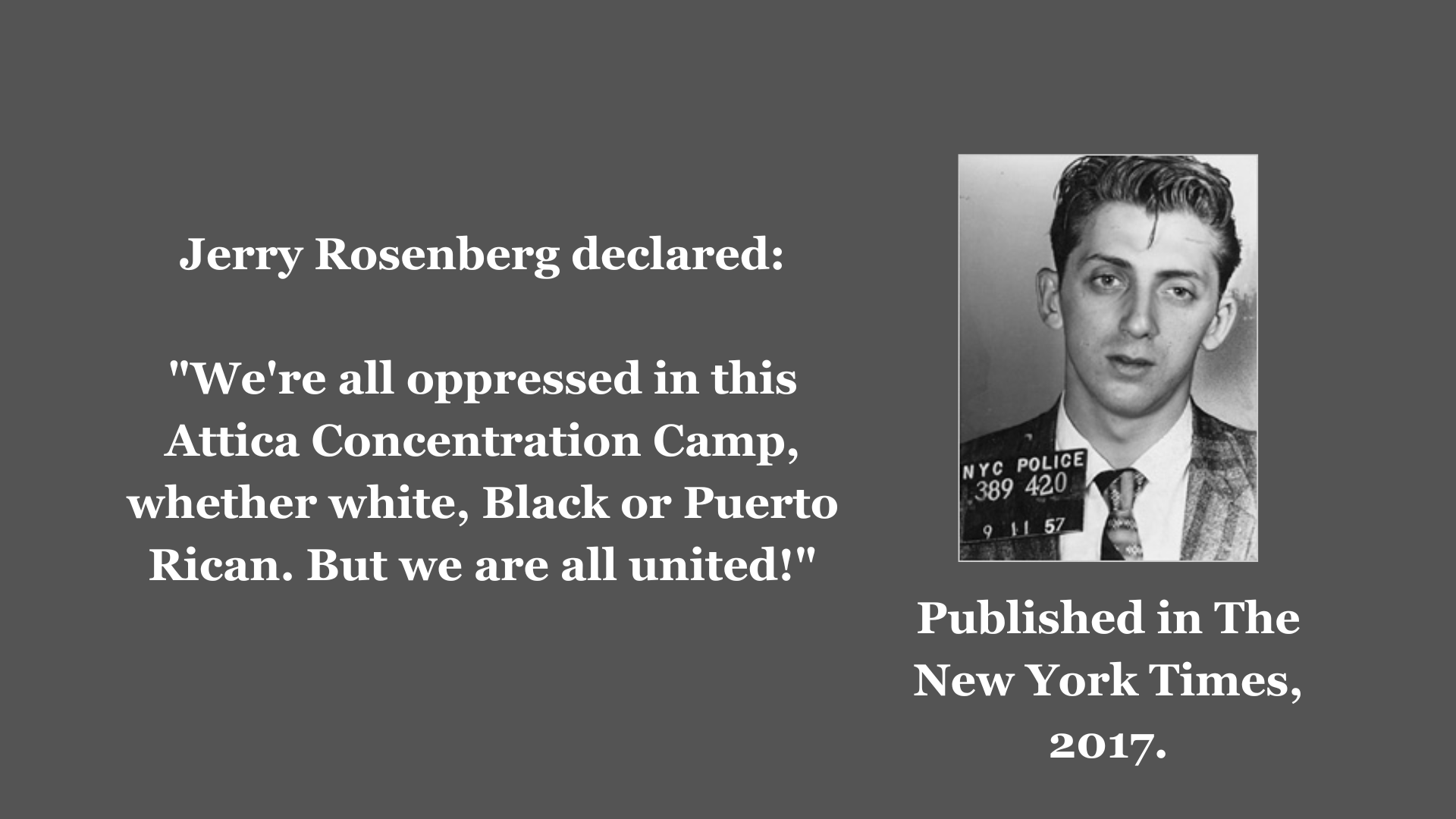
On September 9, prisoner Jerry Rosenberg handed Oswald "The 15 Practical Proposals"—concrete reforms:
Orisanmi Burton dissertation
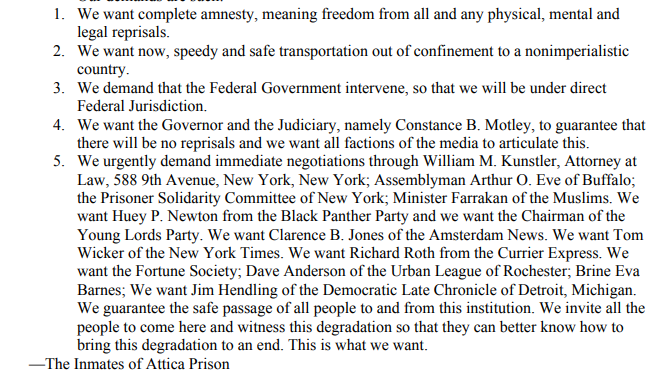
The prisoners also had five urgent demands:
Orisanmi Burton dissertation
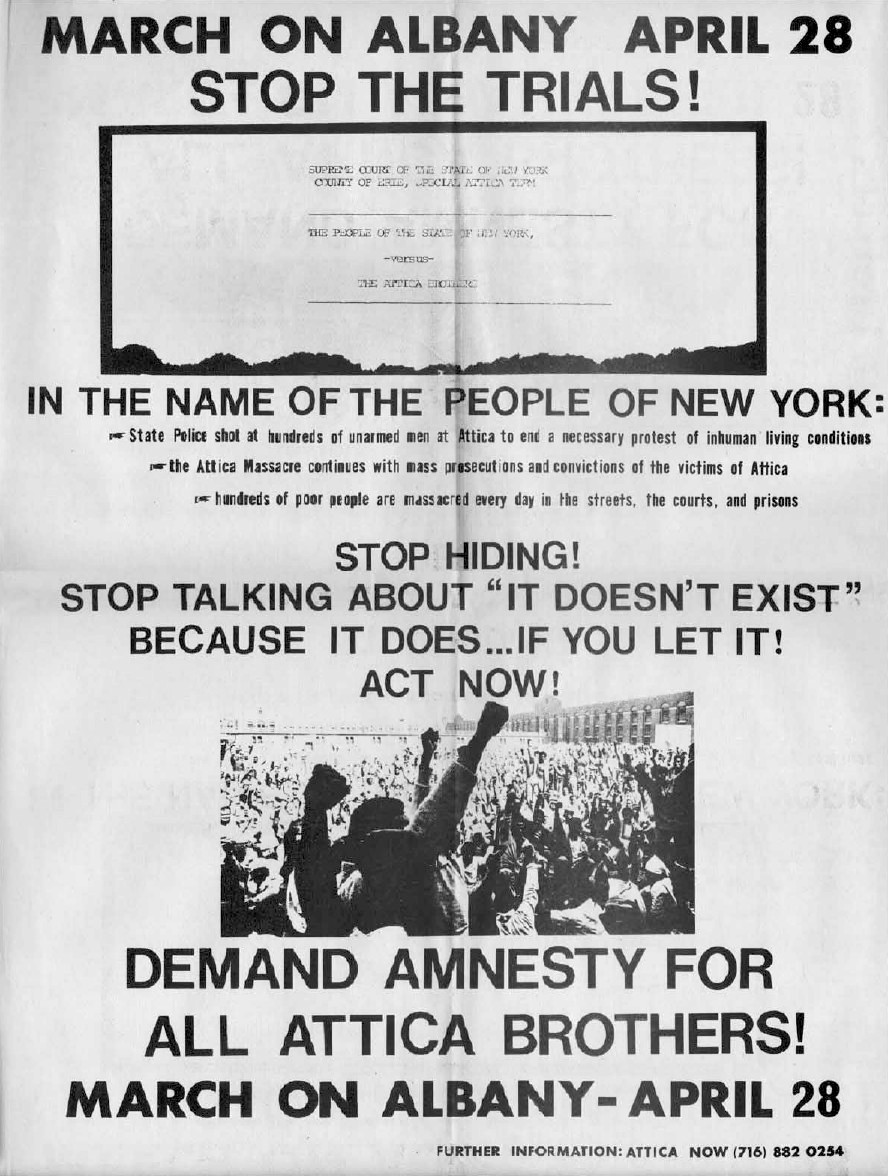
By September 11, Oswald agreed to wage increases, better medical care, improved food, and expanded education, but the state refused amnesty—the central demand—and refused to remove Superintendent Mancusi.
CPC(M-L), “TML Weekly Supplement.”
The Breaking Point
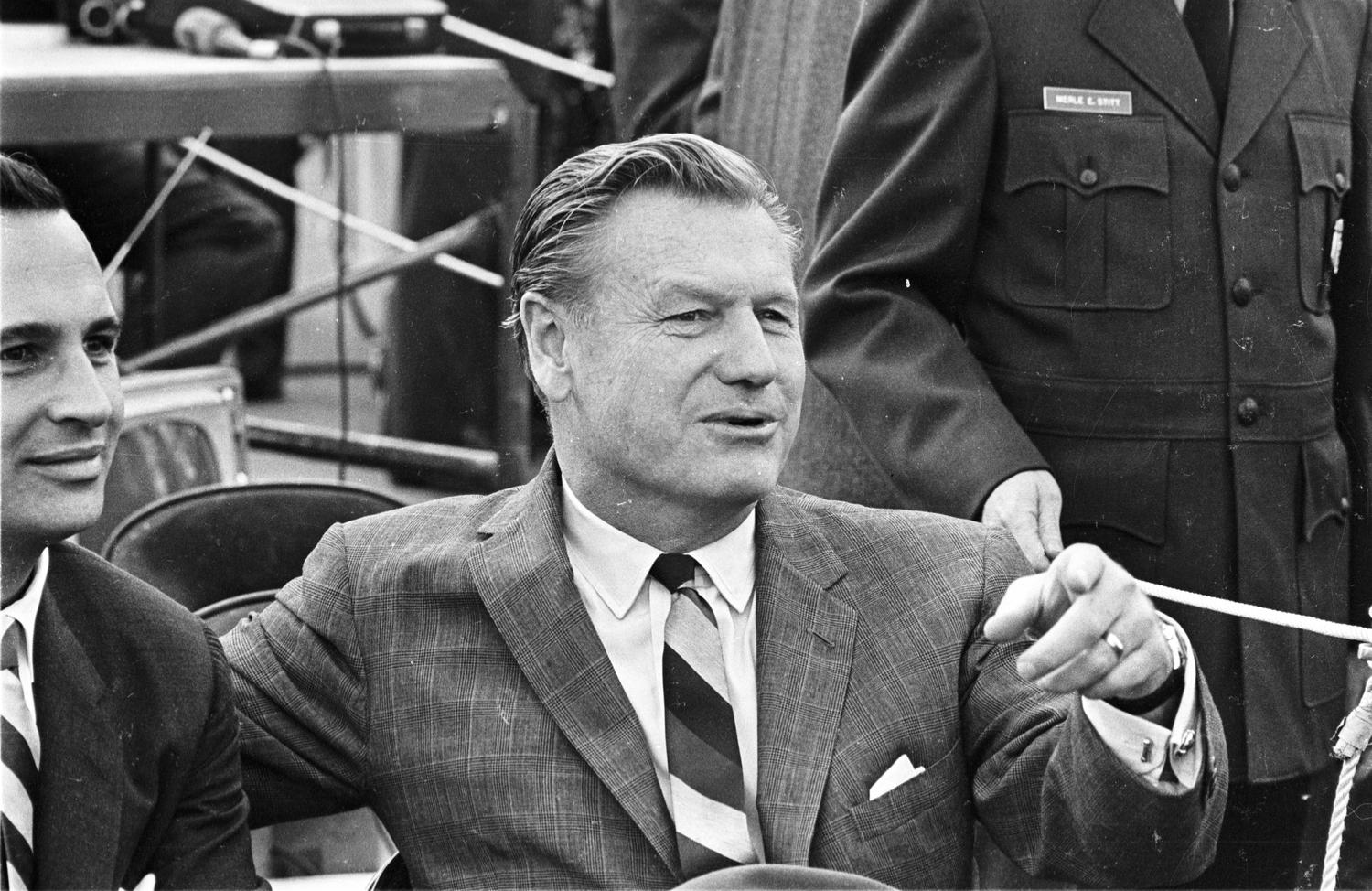
Observers sent an urgent message to Governor Rockefeller:
"The committee of observers in Attica Prison is now convinced a massacre of prisoners and guards may take place. For the sake of our common humanity, we call on the Governor to come to Attica."
Wicker, 208.
Hostage Edward Cummingham spoke:
"[Governor Rockefeller] must give them clemency. He must give them clemency from criminal prosecution. Anything else other than this is just as good as dropping dead, because these things are what has got to be had and there is no tinkering or none of this stuff. I mean this is cut and dry. That's all there is to it."
Edward Cummingham's speech for all 38 hostages, September 12, 1971. Wicker, 236.
Rockefeller refused to visit and ordered the prison retaken by force.
"The decision to retake the prison was a decisive reassertion by the state of its sovereignty and power."