The Demands
In January 1971, Russell G. Oswald became New York's Commissioner of Correctional Services, promising reforms.
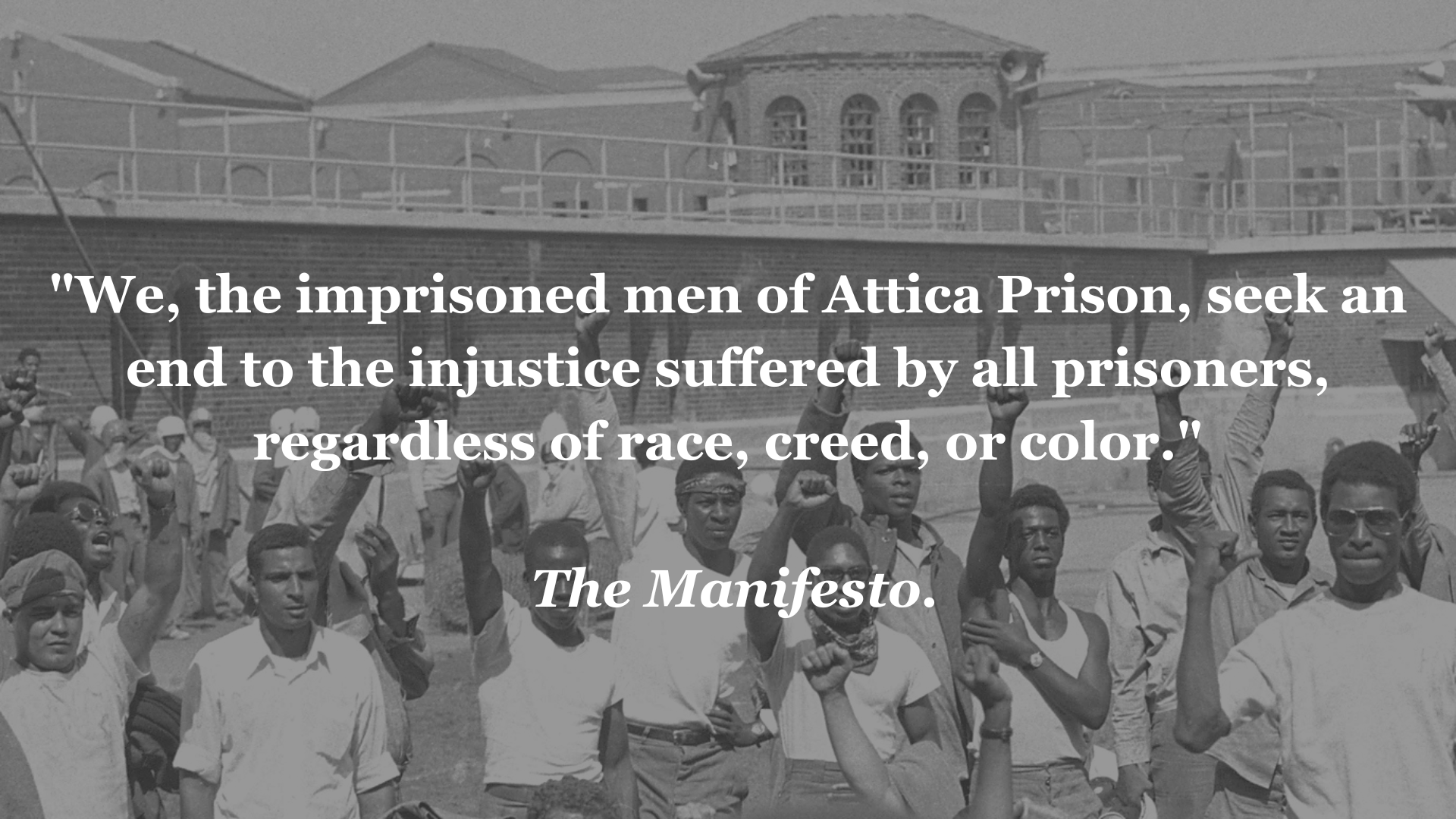
On July 2, the Attica Liberation Faction gave Oswald a manifesto listing 27 demands, including minimum wage, doctor visits, fresh vegetables, library books, and religious access.
"In response to the cruel treatment endured in prison, Frank Lott, Donald Noble, Carl Jones-EL, Herbert X. Blyden, and Peter Butler created the Attica Liberation Faction. Their main goal was to teach political education to the other members of the Faction.." (Akira Rose, “A History of the Attica Uprising”).
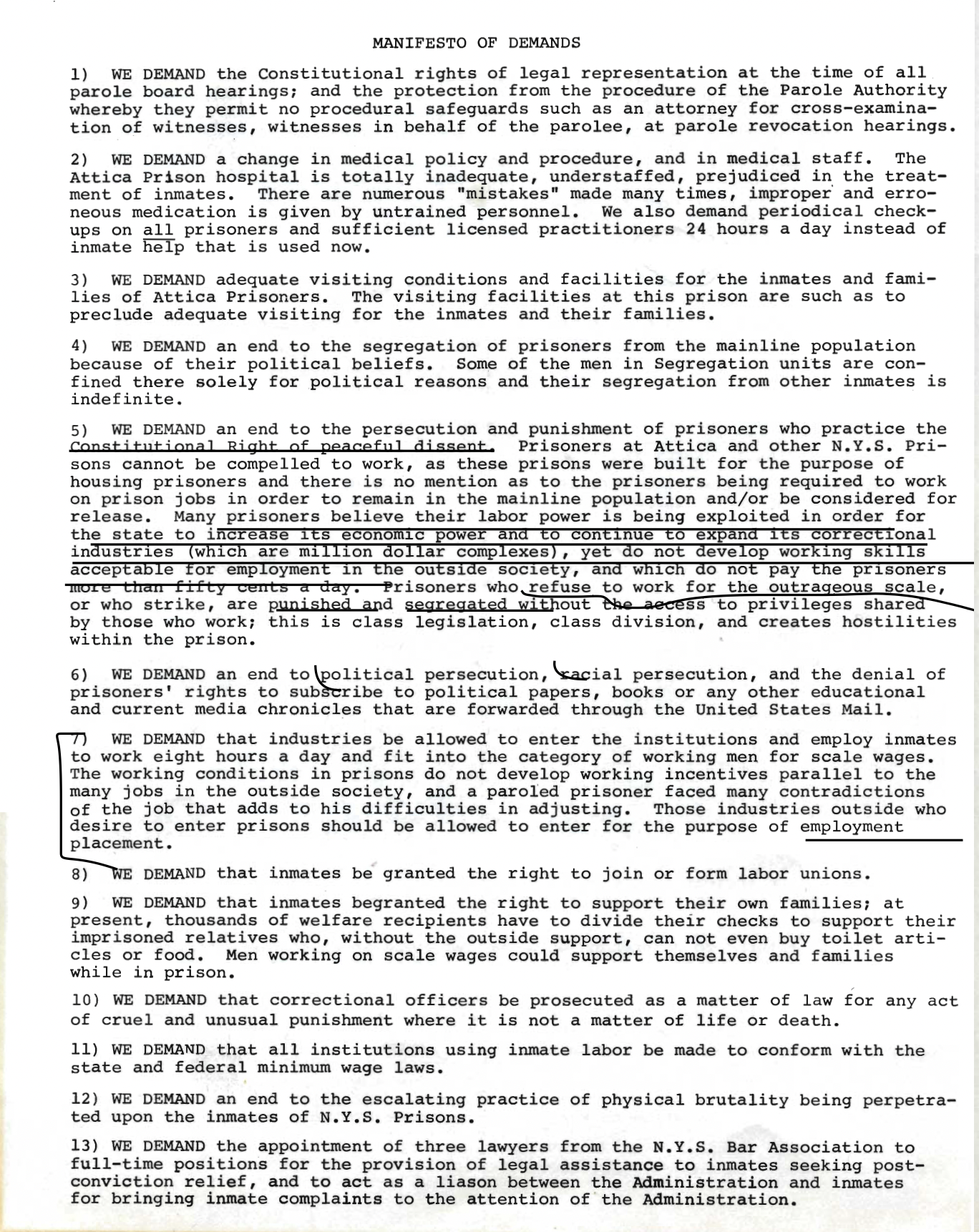
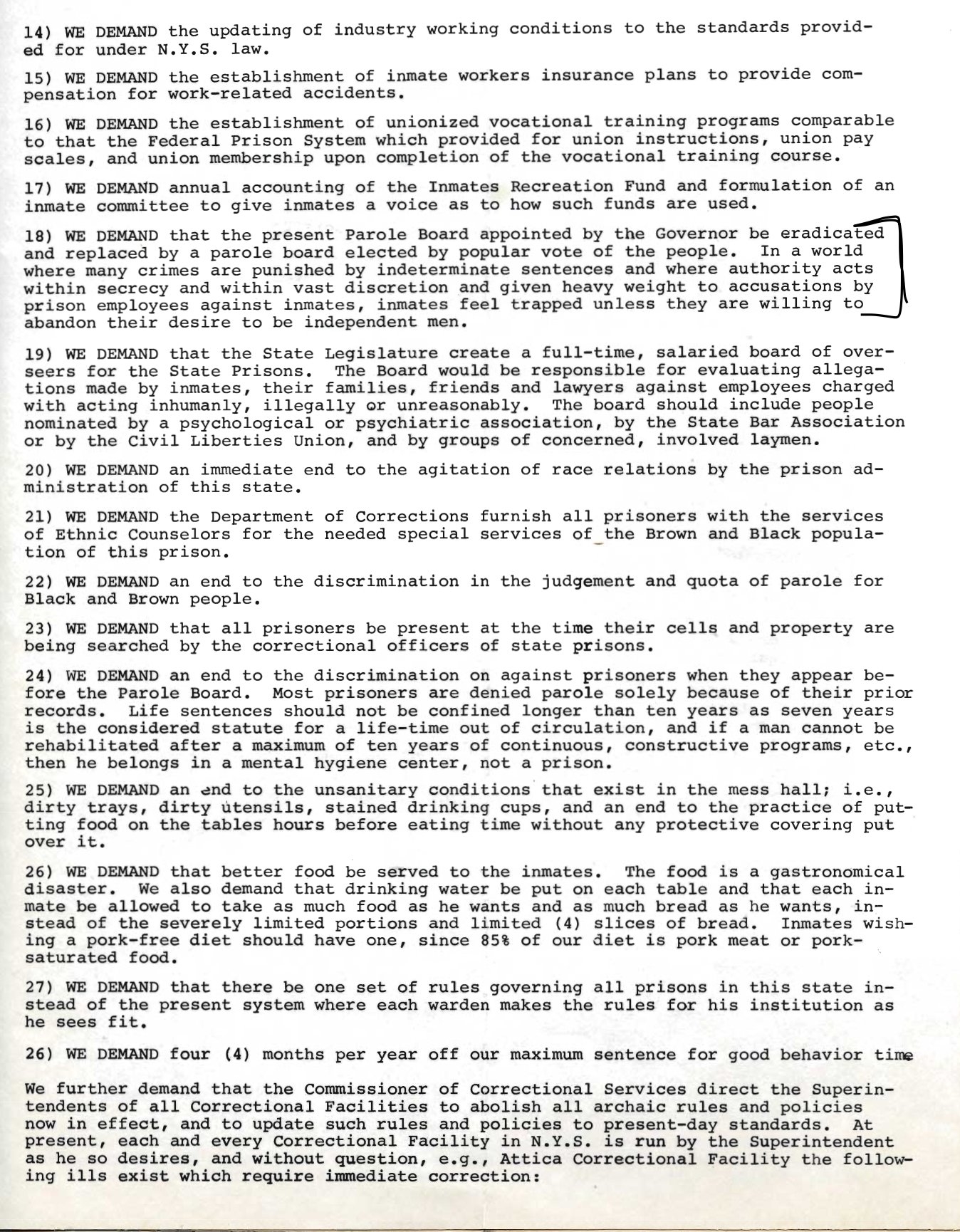
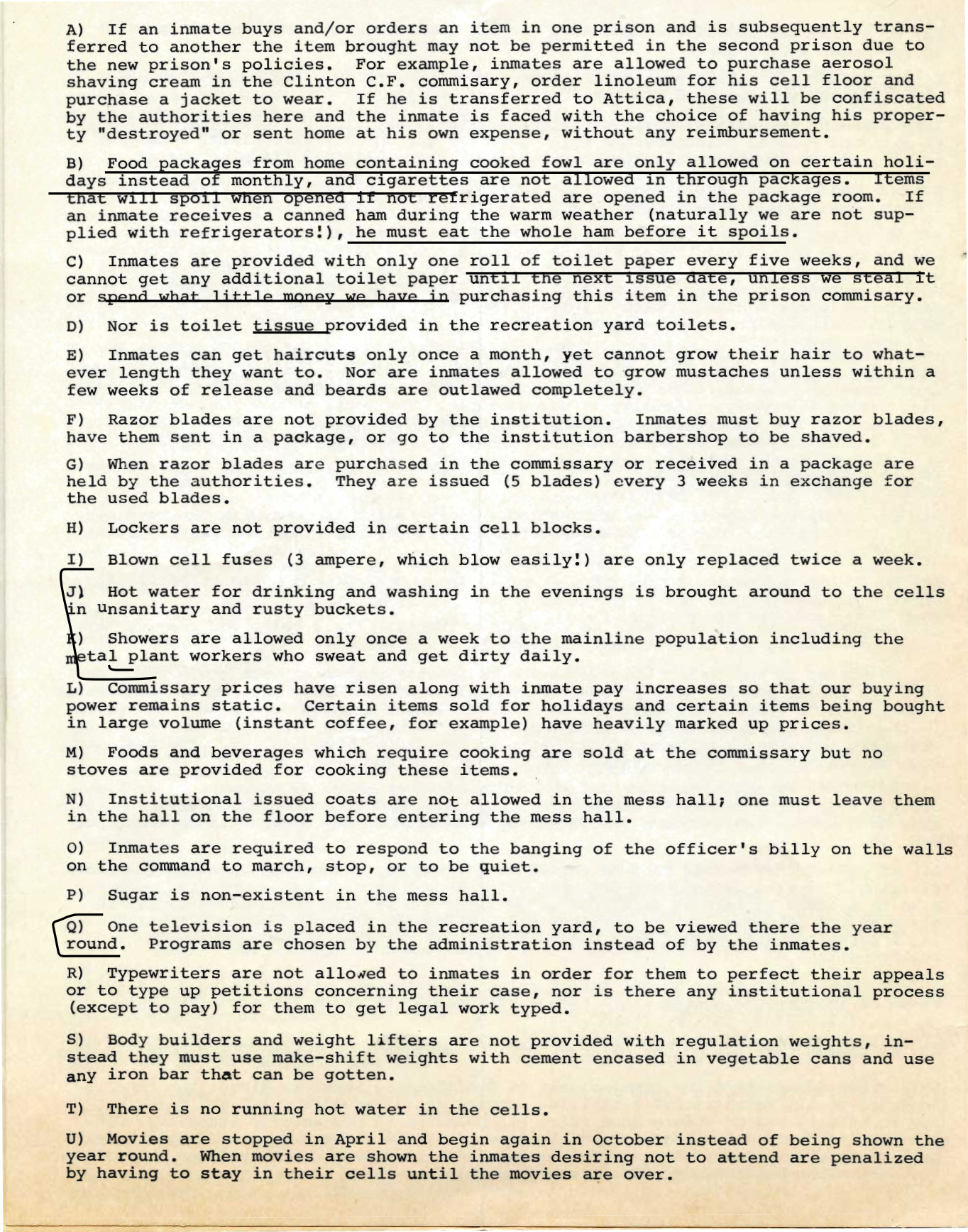
The Attica Liberation Faction Manifesto of Demands. The Freedom Archives.
"If one examines the twenty-eight demands accepted by the state, one sees that these proposals represent not a riot by prisoners trying to escape, but the desperate, last-gasp attempt by 1,200 men to achieve a decent standard of survival." U.S. Congressman Herman Badillo
NY State Museum, Open Wounds, 2021.
"We want to be helped while we're here. We don't wanna be brutalized...We wanna help the guards who are watching over us, to understand that we are human beings. And when you look at the demands, it was all about improving on the quality of life.." (Interview with Arthur Eve).
Useless Officials
"Living in this atrocious environment, incarcerated persons are subjected to unnecessary, unprovoked physical abuse."
Anonymous inmate, Correctional Association 2014.
"In a concerted, peaceful lobbying effort over months, they had been unable to effect even such simple changes as clean trays to eat from or more than one shower a week."
McKay Report , 138.
Prisoners voiced their needs to officials hoping to be heard rather than punished but ended up disappointed.
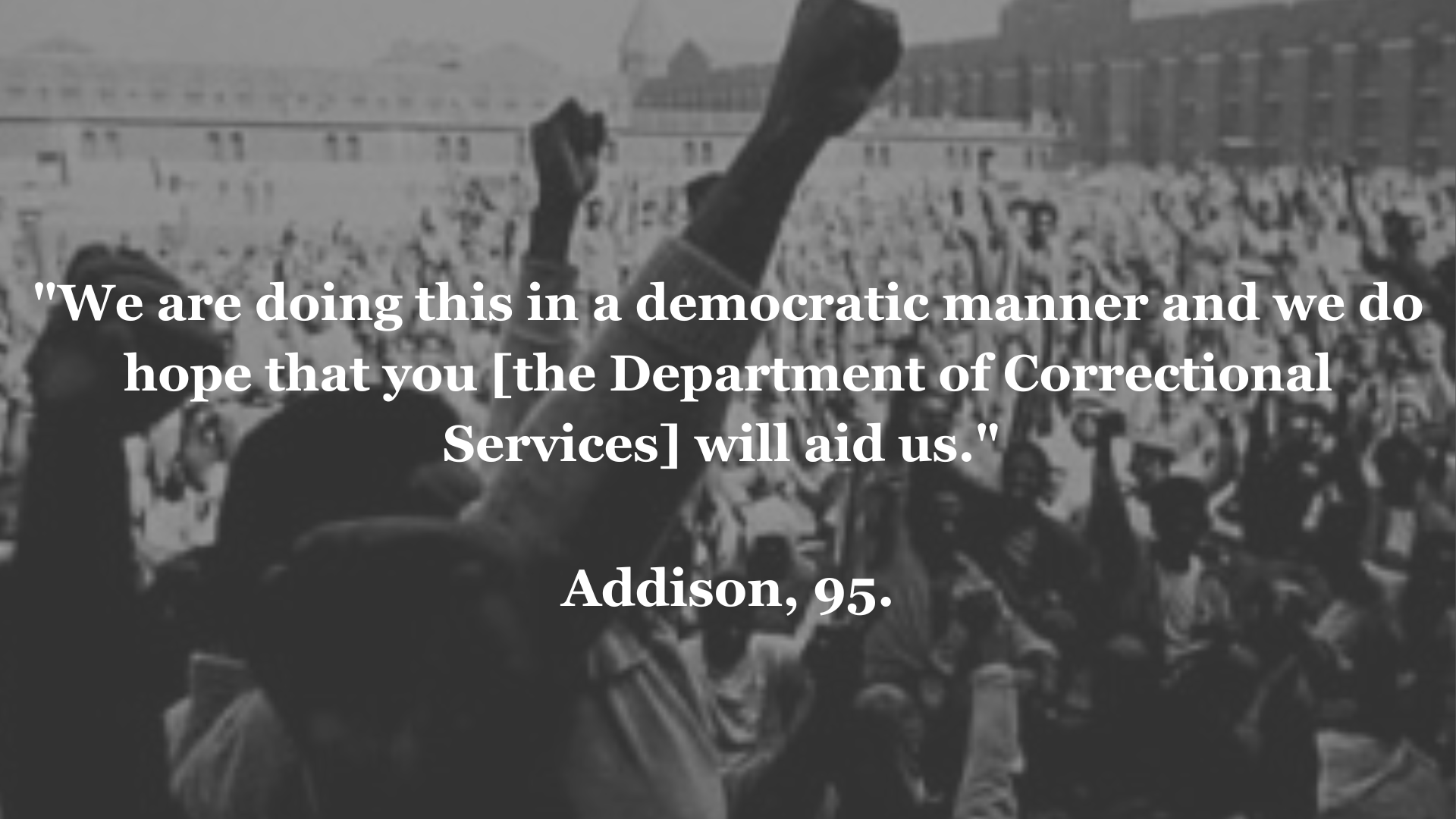
"We find that it is necessary to forward you [Commissioner Oswald] said copy in order for you to be aware of our needs and the need for prison reform. We hope that your department don't cause us any hardships in the future because we are informing you of prison conditions. We are doing this in a democratic manner and we do hope that you [the Department of Correctional Services] will aid us."
Addison, McKay, 95.
September 2: Oswald responded with a taped message with no real changes.
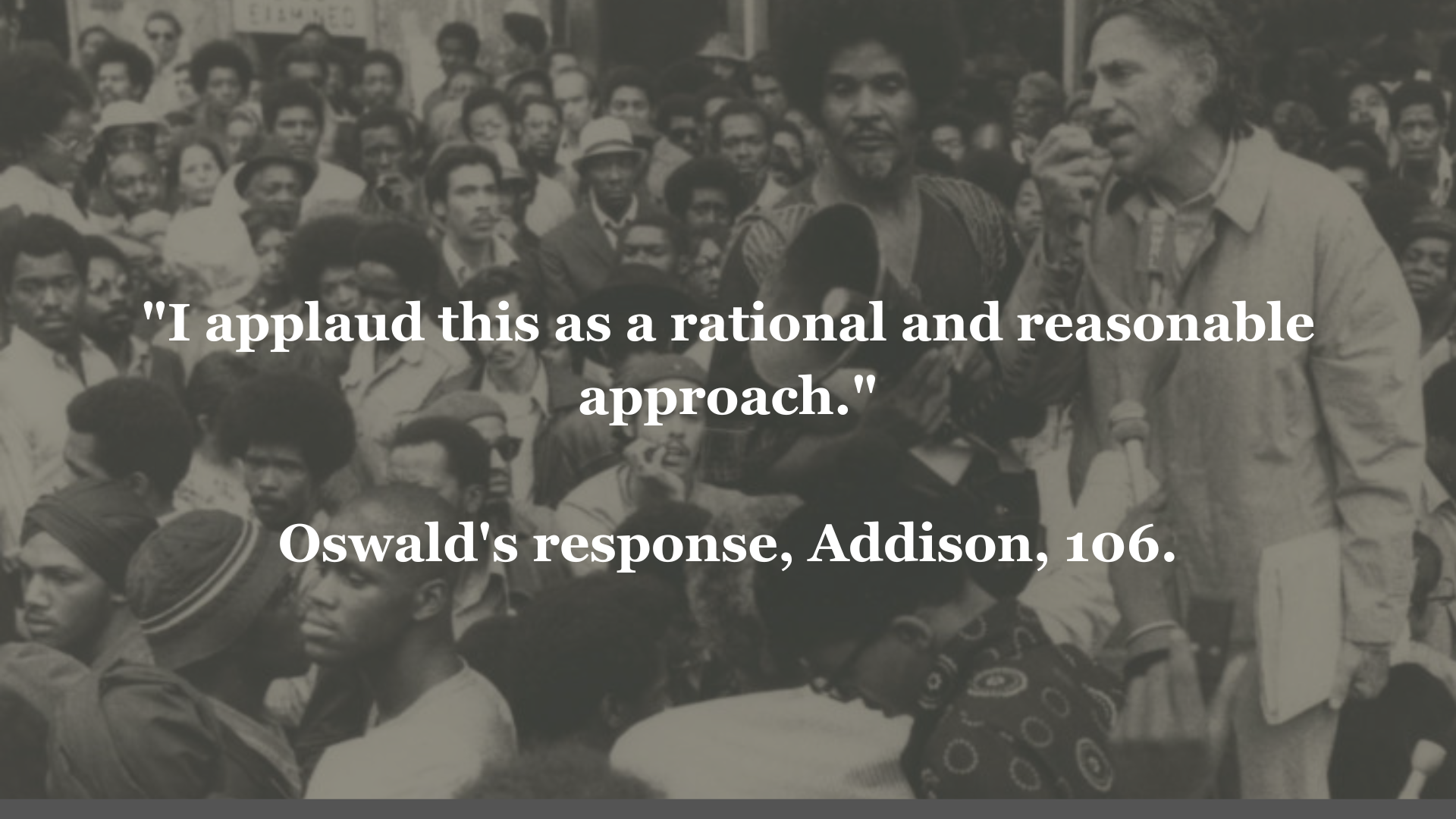
"I have received your presentation of demands and will give careful consideration to the entire list before responding in full. I have taken note of the fact that you have given assurances that your approach will be in a democratic fashion and I applaud this as a rational and reasonable approach."
Addison, McKay, 106.
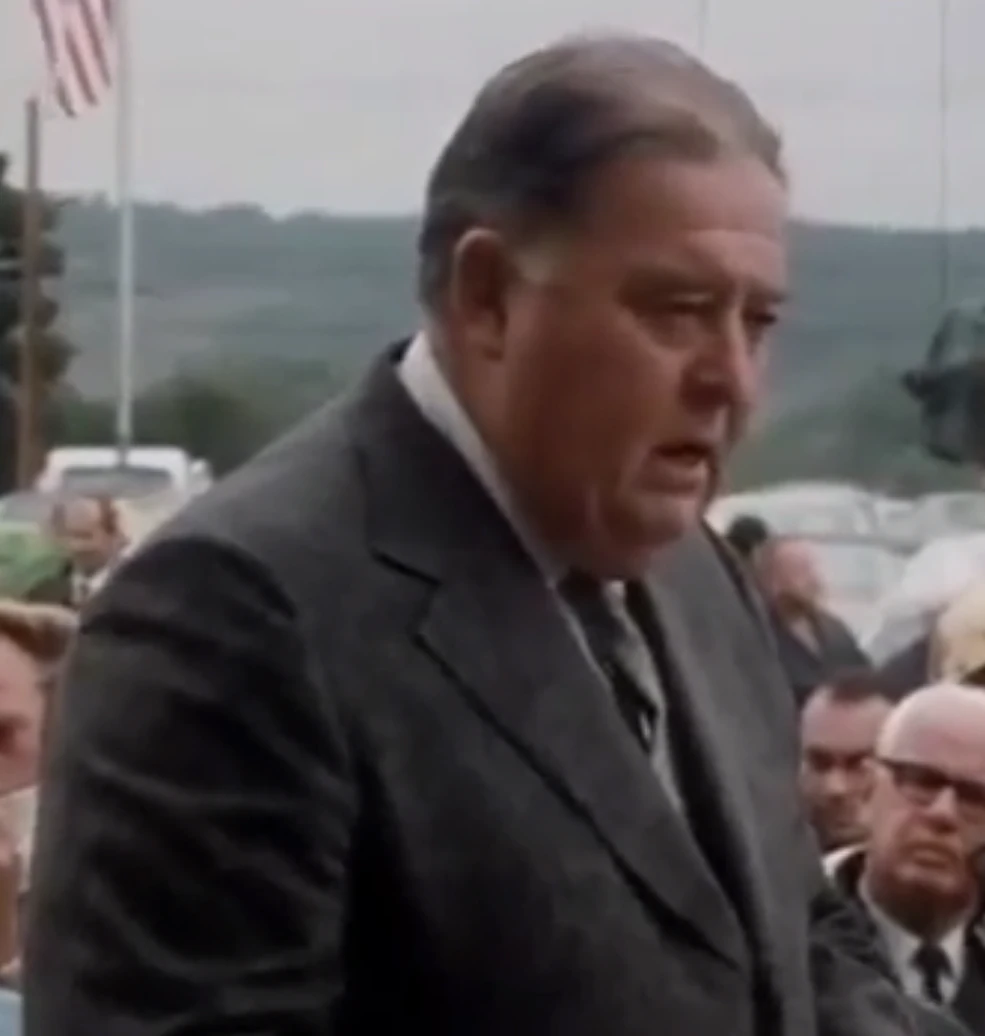
Oswald Historica Wiki
Despite advocacy, nothing changed.
An inmate described the reaction:
"All I could hear was earphones hitting the wall, 'That's a cop-out.' He did not make any concessions whatsoever."
Inmate testimony, McKay Report , 141.
Prisoner, Samuel Melville, was furious
"Sue t[he] motherfucker or better yet shoot him [Mancusi]. But for christs sake do something."
Samuel Melville's letter to his lawyers Melville letter, September 4, 1971
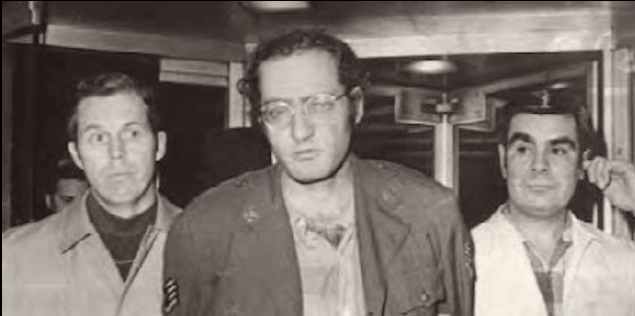
CrimeReads, 2021.
Nothing changed. Summer passed. No reforms came.
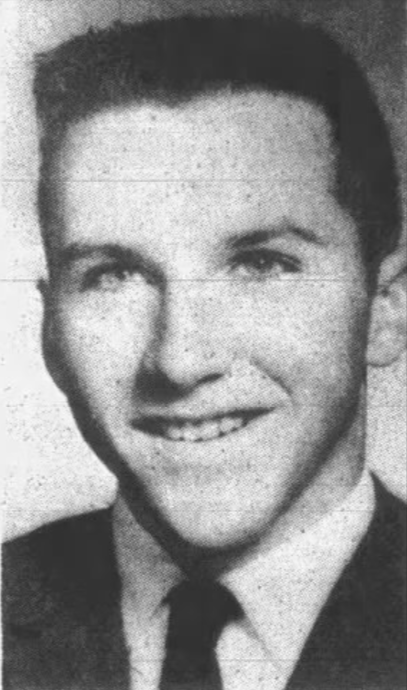
William Quinn, Officer Down Memorial Page.
September 8: Guards beat two inmates. William Ortiz protested, throwing a soup can at an officer. His punishment was solitary confinement in "the box" where guards beat him. The following morning,
prisoners freed Ortiz and launched an uprising. By 9:00 AM, 1,281 inmates held D-Yard and 42 officers hostage. Guard William Quinn was fatally injured, passing two days later.
(NY State Archives)
The hostages' treatment varied. Some guards were beaten in the initial chaos.
"Convicts at first kicked me and broke my arm. But another prisoner called them off. Later I was addressed as 'sir,' given cigarettes, hot meals and [stuff,] and a prison doctor was allowed to treat my arm."
Guard Phillip Watkins testimony
Prisoners gave hostages clothing and blankets they lacked themselves, showing organization, not chaos.
The Attica uprising began.
Watkins testimony, Time, 1971.